
Many businesses focus on reducing overall energy consumption (kWh) through upgrades to lighting, HVAC, and equipment. While important, this often overlooks the most significant cost driver: demand charges.
What Are Demand Charges?
Unlike traditional energy charges that bill you for total consumption (kWh), demand charges are based on your peak power usage (kW) during a specific timeframe. For example, PG&E calculates demand charges based on your highest 15-minute power draw within a billing cycle.
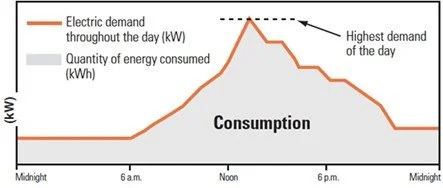
The Shocking Reality:
Imagine being charged for an entire month's worth of peak power based on a single 15-minute spike! This is precisely how demand charges work. By multiplying that peak 15-minute demand by the number of days in the month, utilities effectively penalize businesses for brief periods of high power usage.
Why Demand Charges Matter:
Demand charges shift the focus from total monthly energy consumption to peak power demand. This means even if your overall kWh usage is moderate, a short burst of high power demand can significantly inflate your bill.
Strategies to Minimize Demand Charges:
Reduce Peak Power Demand:
Identify and stagger high-power activities to avoid simultaneous operation.
Implement load-shedding strategies to reduce non-essential power consumption during peak periods temporarily.
Upgrade equipment with energy-efficient alternatives that reduce peak power draw.
Time-of-Use Optimization (When Possible):
If your utility offers time-of-use rates, shift energy-intensive tasks to off-peak or partial-peak hours.
While this is easier for residential customers (e.g., running appliances at night), commercial buildings require strategic planning and automation to shift peak demand effectively.
Assess if shifting demand is a realistic option for your business. Some businesses have very limited ability to shift demand.