
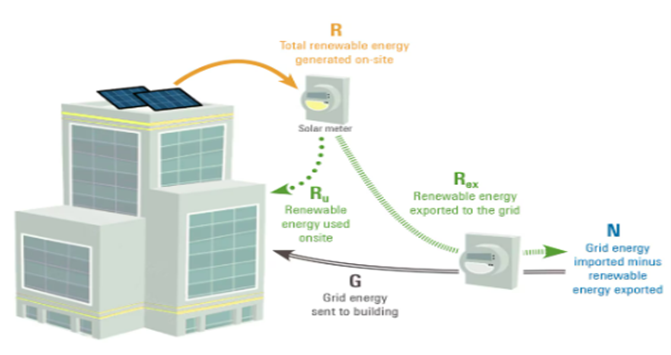
Note on the diagram above with solar panels; there are now two energy sources in the building.
Ru: The energy generated onsite and used onsite
G: Grid energy sent from the utility to the building (aka Purchased from the utility)
Solar Panels cut your reliance on buying energy from your utility company; however, overall power usage will stay the same.
Understanding Solar Energy Integration
The flow of energy in a solar-powered system fluctuates throughout the day. Without battery storage, you'll rely entirely on utility-provided electricity at night. Your energy may come solely from solar panels during peak sunlight if demand is low. At other times, you'll draw from both sources.
Why Invest in Solar Panels?
Potential Cost Savings:
The economic benefits hinge on comparing the cost of solar energy to utility rates.
For owned systems: Calculate the amortized cost of your panels per kilowatt-hour (kWh) by factoring in the initial investment, lifespan, and average monthly energy usage. Compare this to your current and projected utility rates.
For leased systems: Directly compare the solar provider's rates to your utility's.
Net Metering Considerations: While selling excess solar energy back to the grid (net metering) can offset costs, its availability and profitability are becoming increasingly limited, particularly in California.
Environmental Benefits:
Solar energy is clean. Generating your own solar power significantly reduces your carbon footprint by decreasing reliance on fossil fuel-burning power plants. This is the most consistent and beneficial aspect of solar.
Renewable Energy Source:
Solar panels harness the power of sunlight, a virtually inexhaustible resource. Shifting away from finite resources like fossil fuels is crucial for a sustainable future. As was once said, valuable resources should be used for more than just burning.
Enhanced Energy Resilience and Independence:
Solar panels offer a degree of energy independence, reducing vulnerability to grid outages. This is especially valuable in areas prone to natural disasters.
Adding battery storage significantly enhances this resilience, allowing you to maintain power during outages and maximize the use of your self-generated energy.